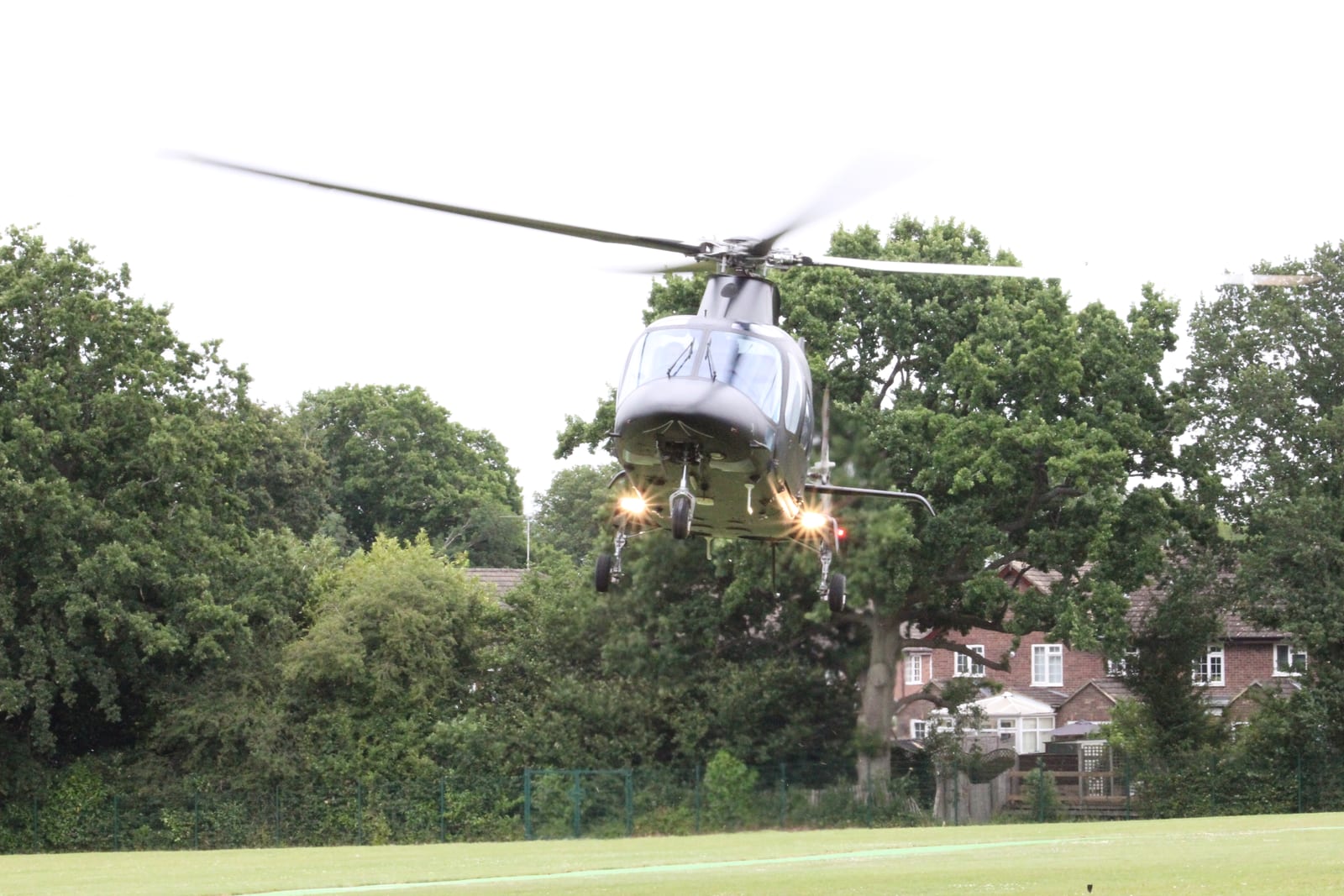
Who has to say yes, what the pilot checks, what we ask the venue and what happens when the answer is no. The permission process for a hotel, wedding venue or private field, step by step.
A helicopter can land at a hotel, a wedding venue or a private field when three things are in place: the landowner or venue agrees, the site is large and clear enough, and the pilot is satisfied with it. We ask for the permission, check the site and confirm the arrangement to you in writing before you pay. If the land is yours or your host's, the permission comes from you.
Want a price for your own flight?
Get my flight optionsWho gives permission for a helicopter to land?
The landowner, or whoever runs the venue on the landowner's behalf. The Civil Aviation Authority does not certify individual fields and lawns. The responsibility for granting access sits with the landowner, and the responsibility for the safety of the landing sits with the commander of the aircraft. Both have to say yes.
Built-up areas are the exception. Low flying over congested areas is restricted, which rules out most town gardens and car parks. That is why central London has Battersea Heliport and why a restaurant on a village street is reached by car from a field outside the village. The background is in can helicopters land at private sites?
What do you ask the venue?
We contact the hotel or venue with a specific request, because a vague one gets a vague answer.
- The date, the arrival time and the departure time.
- The type of helicopter and how many passengers.
- Where on the grounds they would like it to land, and whether that spot has been used before.
- Any conditions: a time window, a route in that avoids the neighbours, a member of staff to meet the aircraft.
- Whether there is a landing fee. If there is, we pass it on at cost in your quote.
- What else is happening that day. A wedding, a golf day or a marquee on the lawn changes the answer.
What answers do venues give?
In our experience there are four.
- Yes, and we have a landing site. Some hotels publish one and ask that landings are booked in advance. Great Fosters and South Lodge are examples.
- Probably, let us check. A pad is talked about but nothing is published. We get the answer from the hotel and tell you in writing what it said.
- Not here, but nearby. Venues in a village or a town have no site of their own. We land at a private site outside the village or at the nearest airfield, and a car does the rest. The Wild Rabbit at Kingham works this way.
- No. Some venues do not accept helicopters, or are closed. We say so and do not take the booking for that site.
What does the pilot check?
Four things, roughly in this order.
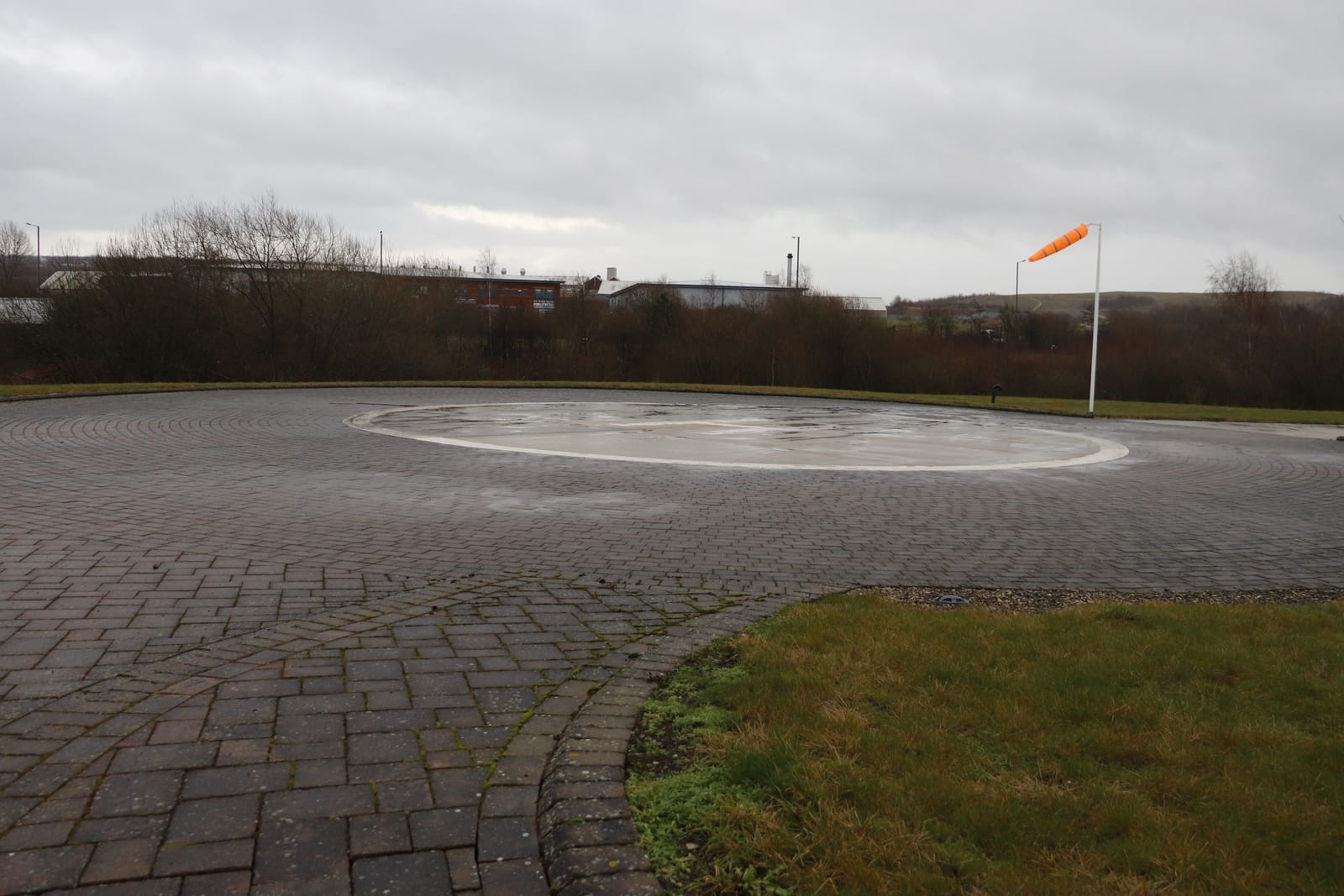
- A clear way in and out, ideally into the wind, with no wires, trees or buildings on the line.
- A firm, reasonably level surface. Short grass, gravel and hard standing all work. Long grass and ploughed ground do not.
- Enough clear space. For an Agusta A109 a circle about 30 metres across is comfortable. For an Airbus H145 or anything larger we look for closer to 40 metres.
- Distance from people, animals and cars while the rotors are turning.
For a site that is new to us the pilot studies the imagery and the approach before committing. Sometimes a member of the team walks the ground in advance.
Tell us the route and the date, and we will send the options.
Get my flight optionsWhat do you need from me?
- The postcode, and if you can, a what3words reference or a pin for the exact spot.
- A couple of phone photographs of the site and of the direction the helicopter would approach from.
- If the land belongs to you or to your host, the landowner's permission in writing.
- The name and number of someone who will be on the ground on the day.
How long does permission take?
A hotel with a published landing site can often confirm quickly. A private site that nobody has used before takes longer, because someone has to look at it properly. For a wedding or a party, send us the postcode as soon as the venue is chosen. A site that is refused with six weeks to go is easy to solve. One that is refused on the Thursday before is not.
What can stop a landing?
- Wires. Power and telephone lines across the approach are the most common reason a pilot says no.
- Livestock and horses in the next field.
- A marquee, staging or parked cars put up on the landing area after it was agreed.
- Soft ground after heavy rain.
- Darkness. A lawn or a field is not lit, so it is a daylight-only site. See winter flights and daylight.
What happens if the answer is no?
We find the nearest place that says yes. That may be a farmer's field with the farmer's agreement, or one of the hundred or more airports, airfields and heliports on our UK locations pages. A car meets the helicopter and the two are timed to each other, as our transfers page describes. You are told which arrangement applies before you commit, not on the day.
Is a landing ever certain?
No landing is unconditional. Permission is agreed for a named date and time, not as a standing right. Every landing remains subject to the landowner's or venue's permission and the pilot's assessment, and the weather has the last word. What we can do is remove the avoidable surprises: ask early, get it in writing and have a second site in mind. The restaurants and hotels pages show how that looks for ten real venues, and going to lunch by helicopter follows one such day from start to finish.
Have a venue in mind? Send the postcode and the date on the quote form. We will tell you where the helicopter can land and what we still need to confirm.